Plumbing Services in East Tucson, AZ
Plumbing services in East Tucson, AZ from Tucson Plumber — water heater repair and replacement, plumbing repairs, drain cleaning, and leak detection for 1970s–1990s homes. Call +1 (520) 523-1313.
Call +1 (520) 523-1313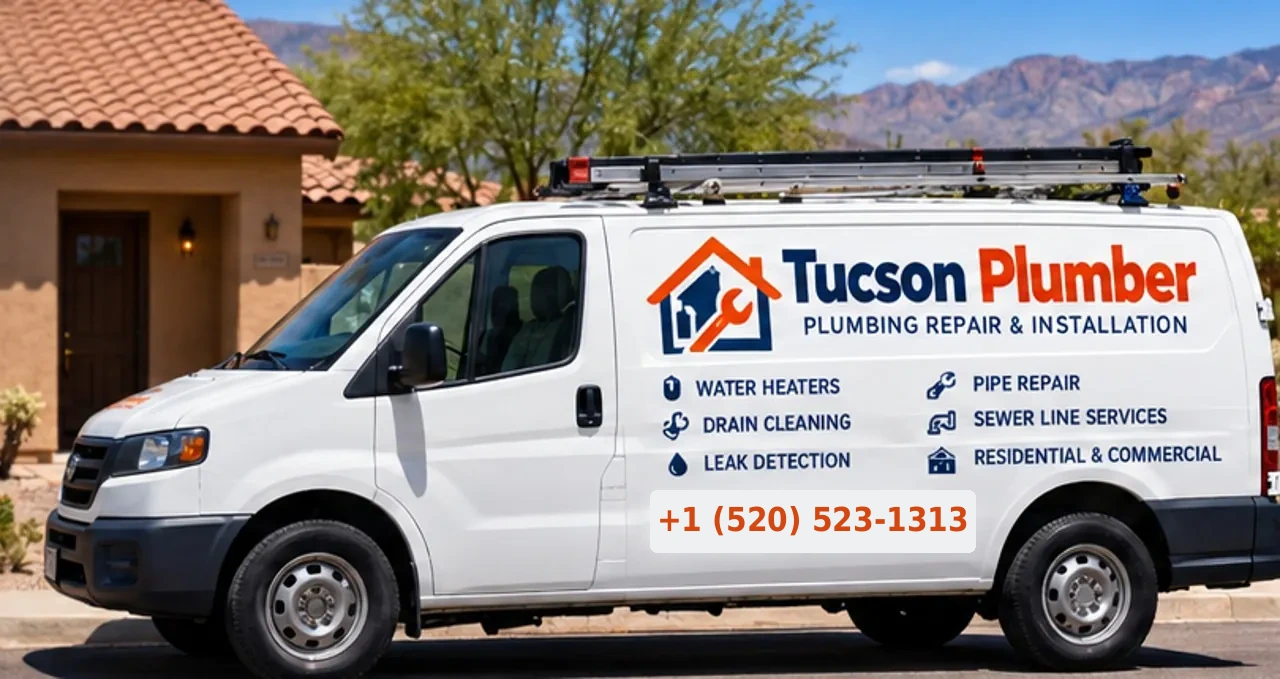
East Tucson is home to some of the city's largest residential subdivisions — mile after mile of family homes built during the area's long expansion from the 1970s through the 1990s. These neighborhoods were built well, but time has caught up with many of their plumbing systems. Water heaters are reaching the end of their service lives, copper supply lines are developing pinhole leaks, and drains that were installed decades ago are starting to fight back.
If your East Tucson home is showing the first signs of plumbing trouble — or you'd rather get ahead of it — Tucson Plumber is ready to help. Call +1 (520) 523-1313 to schedule service or an evaluation.
East Tucson's Housing Stock: Entering the Replacement Years
The Eastside's growth came in waves. Areas like Rolling Hills and the neighborhoods around Speedway, Broadway, and Golf Links filled in with single-family ranch and two-story homes through the 1970s, 1980s, and 1990s, with townhomes and newer traditional-style homes continuing into the early 2000s. These are overwhelmingly family homes — three and four bedrooms, two-car garages, established landscaping — built at a scale that made East Tucson one of the metro's most populous residential areas.
The plumbing in these homes reflects their era. Copper supply lines were common, sometimes mixed with galvanized in the earliest builds. Drain systems are typically ABS plastic, which holds up better than the cast iron of older central Tucson homes but still isn't immune to problems after 30 to 50 years. Most homes sit on slab foundations, standard for the era and the region.
This puts many East Tucson homes in a specific stage of the plumbing lifecycle: the original materials aren't failing everywhere at once, but key components are hitting replacement age at the same time. A water heater installed when the home was built has likely been replaced once already — and that replacement is now aging too. It's the stage where proactive homeowners save the most money, because catching a system at the end of its life beats responding to its failure.
Common Plumbing Issues in East Tucson Homes
Pinhole Leaks in Copper Supply Lines
Copper is a long-lived material, but in Tucson's water conditions it can develop pinhole leaks — tiny perforations that spray fine mists of water inside walls, attics, or crawl spaces. The first sign is often a damp spot on drywall, a musty smell in a closet, or a water bill that ticks upward for no clear reason. Because the leaks start so small, they can persist for weeks before being noticed. If your home has original copper lines from the 1970s or 1980s, it's worth knowing that this is one of the most common failures we see in Eastside homes of that vintage.
Water Heaters at End of Life
A conventional tank water heater typically lasts around a decade, give or take depending on water quality and maintenance. In East Tucson subdivisions, that means many households are living with heaters that are due — or overdue — for replacement. Warning signs include rumbling or popping sounds from sediment buildup, rusty hot water, water pooling at the base of the tank, or simply running out of hot water faster than you used to. A failed tank doesn't just leave you cold; it can release dozens of gallons of water into a garage or utility closet. Our water heater repair technicians can tell you honestly whether a repair will buy meaningful time or whether replacement is the smarter move.
Aging Drain Lines and Recurring Backups
ABS drain lines from the 1970s through 1990s hold up reasonably well, but joints can separate, sections can belly under shifting soil, and decades of grease and scale narrow the interior. The symptom pattern is familiar: a bathroom that drains slowly, a kitchen sink that gurgles, or a main line that backs up after heavy use. When snaking clears the clog but it returns within months, the pipe itself — not just its contents — needs attention. Professional drain cleaning paired with a camera inspection lets us see what's actually happening inside the line.
Failing Fixtures and Shutoff Valves
Original faucets, toilets, and shower valves in 30-to-50-year-old homes wear out in ways that waste water and money: constantly running toilets, dripping faucets that resist new washers, and supply valves that won't fully close. These are rarely emergencies, but they're the steady drip — literally — of an aging system, and they're worth addressing during any service visit.
When Repair Stops Making Sense
One of the most useful conversations we have with East Tucson homeowners is about timing. Here's how we frame the repair-versus-replace decision for the most common scenarios:
Water heater repair vs. replacement. If a six-year-old heater has a faulty thermostat or heating element, repair is usually the right call — there's plenty of life left in the tank. But if a 12-year-old tank is rusting at the base or leaking from the tank body itself, no repair changes the fact that the tank is done. Putting money into a heater that's already past its expected lifespan is paying for a short delay, not a solution.
Sewer line spot repair vs. replacement. A single separated joint or one intruded section of pipe can often be repaired in place, and that's the economical choice when the rest of the line looks healthy on camera. But when inspection shows multiple problem areas — bellies, cracks, and root intrusion along the whole run — replacing the line ends the cycle of repeat service calls.
Copper pinhole leaks: patch vs. repipe. One pinhole in an accessible location is a straightforward repair. But pinhole leaks in copper tend to be systemic rather than isolated; when the chemistry attacking the pipe is the same throughout the house, the second and third leaks are usually on their way. If you're patching leaks every year, a repipe or partial repipe changes the equation from ongoing emergency response to a finished project.
The guiding principle: repair what's isolated, replace what's systemic. We'll always explain which situation you're in.
How We Diagnose East Tucson Plumbing Problems
Good decisions start with an accurate diagnosis, and our evaluations are built around finding the real cause rather than treating symptoms. Here's what a typical diagnostic visit looks like:
We start with your account of the problem — when it started, what you've noticed, and what, if anything, has been done before. Then we inspect the relevant fixtures, connections, and exposed piping. For hidden leaks, we use electronic leak detection equipment to locate the source without opening walls unnecessarily. For drainage issues, a camera inspection of the line shows us the interior condition — separations, bellies, scale, roots — in real time, and we review the footage with you so you can see exactly what we see.
What you get is a clear diagnosis, your options with honest pros and cons, and a written estimate. No pressure, no jargon — just the information you need to decide.
Early Warning Signs Eastside Homeowners Shouldn't Ignore
Many East Tucson plumbing problems give advance notice. Pay attention to these:
- Hot water runs out faster than it used to, or the heater makes rumbling noises — both point to sediment buildup and an aging tank.
- Damp drywall, bubbling paint, or musty odors near bathrooms, kitchens, or laundry areas, which can indicate pinhole leaks in supply lines.
- Slow drains in multiple fixtures at once, suggesting a developing restriction in the main line rather than a single clogged trap.
- Toilets that run constantly or need the handle jiggled, wasting significant water over time.
- A water bill that creeps up without any change in household water use.
- Sewer smells or gurgling from drains, which can mean a venting issue or a developing sewer line problem.
Any of these is worth a call to +1 (520) 523-1313 before it becomes a bigger — and more expensive — problem.
Simple Maintenance Habits That Extend System Life
East Tucson homes are at the age where maintenance pays the highest dividends. None of these take long:
- Flush your water heater once a year. Tucson's hard water deposits sediment quickly, and regular flushing extends tank life and keeps heating efficient.
- Test your water heater's pressure-relief valve annually. Lift the lever briefly; water should flow and stop. If it doesn't, the valve needs replacement.
- Clean out drain stoppers and use strainers in kitchen and bathroom drains. In aging drain lines, every bit of prevention helps.
- Check under sinks and around toilets a few times a year for dampness, staining, or corrosion on supply lines and valves.
- Know your main water shutoff location and confirm it turns freely. In a leak emergency, fast shutoff is the difference between a mop-up and a renovation.
What Shapes Plumbing Project Costs in East Tucson
Plumbing costs depend on the job, not the ZIP code — but certain factors come up again and again in Eastside homes:
- Slab foundation access. With most East Tucson homes on slabs, reaching supply lines often means cutting and patching concrete or rerouting through walls and attics. The access strategy is one of the biggest cost drivers.
- Water heater location and venting. Replacing a heater in an accessible garage is straightforward; relocating one, upgrading venting, or bringing connections up to current code adds labor.
- Length and depth of sewer runs. Larger Eastside lots can mean longer sewer lines to the street, which affects excavation and material costs for replacements.
- Fixture quality and count. Replacing a basic faucet is one thing; upgrading multiple bathrooms with quality fixtures during a remodel is another project entirely.
- Whether problems are caught early. A pinhole leak found during a maintenance visit is a small repair. The same leak discovered after it has soaked drywall and flooring for a month is a small repair plus restoration.
We quote every job in writing after seeing the work, so you'll know the full picture before anything starts.
East Tucson Plumbing FAQs
My home was built in the 1980s. Should I be worried about my plumbing? Not worried — but aware. Copper and ABS systems from that era are generally serviceable, yet they're entering the phase where water heaters fail, valves wear out, and the first pinhole leaks appear. A professional evaluation now can map out what needs attention and what can wait.
What causes pinhole leaks in copper pipes? Pinhole leaks result from localized corrosion of the copper from the inside, influenced by water chemistry and flow patterns. Once they start in a home, they often continue, which is why repeat leaks are a sign to consider repiping rather than patching indefinitely.
How do I know if my water heater needs to be replaced instead of repaired? Age and condition are the deciding factors. A younger heater with a failed part is a repair candidate; an older tank showing rust, leaking from the tank body, or well past its expected lifespan is a replacement candidate. We assess the unit's actual condition rather than guessing.
Why does my main drain keep backing up after being snaked? Snaking clears the blockage but doesn't fix the pipe. If the line has a belly, a separated joint, or heavy scale, debris will collect again. A camera inspection identifies the underlying defect so it can be repaired properly.
Are the plumbing problems in East Tucson different from older parts of the city? Yes, in emphasis. Midtown's mid-century homes often face system-wide material failure — galvanized and cast iron reaching end of life everywhere at once. East Tucson's 1970s–1990s homes more often face component-level aging: heaters, valves, fixtures, and the first wave of copper pinholes. The diagnostic approach is similar, but the solutions differ. Homeowners in Midtown Tucson deal with an older generation of piping materials.
Can a leaking water heater be dangerous? A leaking tank is primarily a water-damage risk, but gas-fired heaters add a combustion component that should be checked when the unit is serviced. Any water pooling at the base of a heater deserves prompt attention — call +1 (520) 523-1313.
Do I need to replace all my copper pipes if I get one pinhole leak? Not necessarily. A single accessible leak can be repaired. But document it: if more leaks follow within a year or two, the pattern suggests the system is deteriorating, and a repipe becomes worth discussing.
How long does a water heater replacement take? Most standard replacements are completed in a single visit. We'll confirm the timeline when we quote the job, since venting, location, and code updates can affect the schedule.
Schedule Plumbing Service in East Tucson
Whether it's a water heater on its last legs, a drain that won't stay clear, or a full evaluation of an aging system, the team at Tucson Plumber is ready to help East Tucson homeowners. Call +1 (520) 523-1313 today to book your appointment.
Have a Plumbing Problem? Let's Talk It Through.
Tell us what's happening — a leak, a clog, no hot water, a sewer smell — and we'll explain your options.